
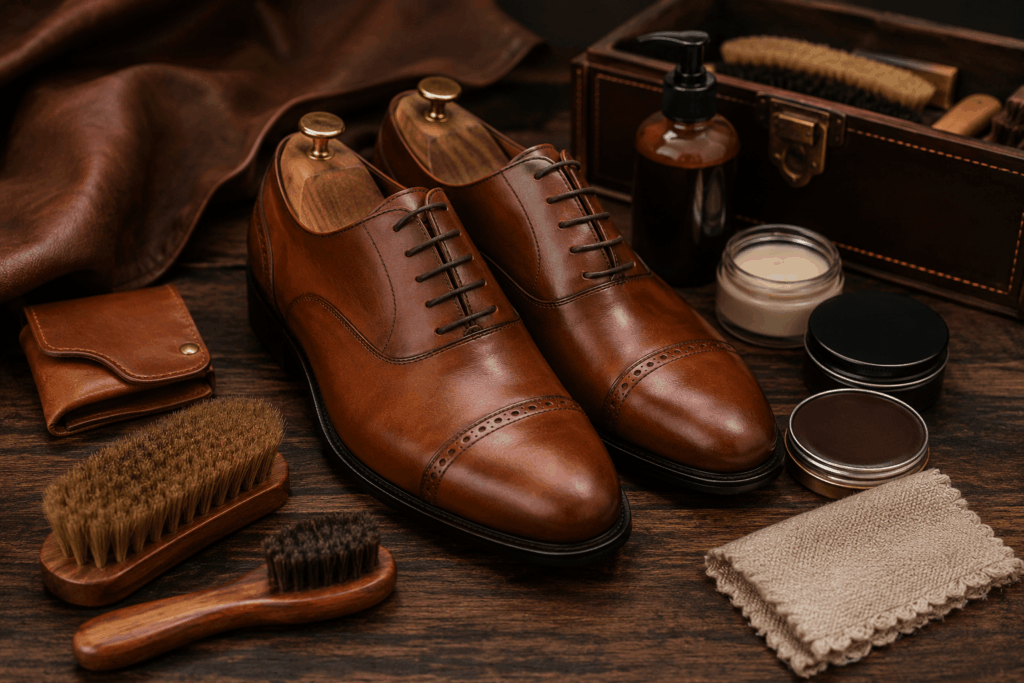
How to Care for Genuine Leather Shoes: A Handmade Shoemaker’s Guide
By Lerato, Founder of Ribbons Collection
Every pair of Ribbons Collection shoes is handmade in South Africa from genuine leather — which means they’re built to last for years, not seasons. But genuine leather rewards a little care. Here’s exactly how I look after mine, and how you can look after yours.
Why Genuine Leather Needs Different Care
Unlike synthetic materials, genuine leather is a natural material — it breathes, it flexes, and it can dry out or crack if it’s neglected. A few minutes of care every few weeks is the difference between shoes that last a year and shoes that last a decade.
How to Clean and Condition Leather Shoes (Step-by-Step)
- Remove loose dirt first. Use a soft, dry brush or cloth to wipe away dust and dry mud before adding any moisture — cleaning over dirt can grind it into the grain.
- Wipe with a lightly damp cloth. Use water only, no soap, and avoid soaking the leather. Work in small circular motions.
- Let them air-dry naturally. Keep shoes away from direct heat sources like heaters or direct sun, which cause leather to dry out and crack.
- Apply a neutral leather conditioner or cream. Use a small amount on a soft cloth, working it into the leather in circular motions. Neutral (colourless) cream won’t affect the shoe’s original colour.
- Let it absorb for 10–15 minutes, then buff with a clean, dry cloth or soft brush until the leather regains its natural shine.
- Repeat every 4–6 weeks, or more often if you wear the shoes daily or expose them to rain.
Caring for Leather in South African Weather
South African summers bring heat and dust; winters in some regions bring rain and humidity. A few local-specific tips:
- After rain: let shoes dry naturally at room temperature, stuffed with newspaper to help hold their shape and absorb moisture — never force-dry them near a heater.
- Salt or water stains: wipe gently with a cloth dampened with equal parts water and white vinegar, then condition as normal once dry.
- Dusty conditions: brush shoes before storing, since dust left on leather can dull the finish over time.
Storing Your Shoes Properly
- Use shoe trees or stuff shoes with paper to help them hold their shape between wears.
- Store in a cool, dry place away from direct sunlight.
- Avoid airtight plastic bags for long-term storage — leather needs to breathe.
Frequently Asked Questions
How often should I condition leather shoes? Every 4–6 weeks under normal wear, or more frequently if you wear them daily or they’re exposed to rain regularly.
Can I use water to clean leather shoes? Yes — a lightly damp cloth is fine for surface cleaning, but avoid soaking the leather, and always let shoes air-dry naturally afterward.
Will conditioning change the colour of my leather shoes? A neutral (colourless) leather cream won’t change the colour. Coloured polishes can enrich or deepen the tone, but always test on a small, hidden area first.
How do I stop new leather shoes from creasing? Creasing is natural as leather flexes with wear, but regular conditioning keeps the leather supple, which reduces harsh, deep creasing over time.
Is genuine leather worth the extra care compared to synthetic shoes? Yes — with basic care, genuine leather shoes last significantly longer than synthetic alternatives and develop a richer look over time, rather than wearing out.