
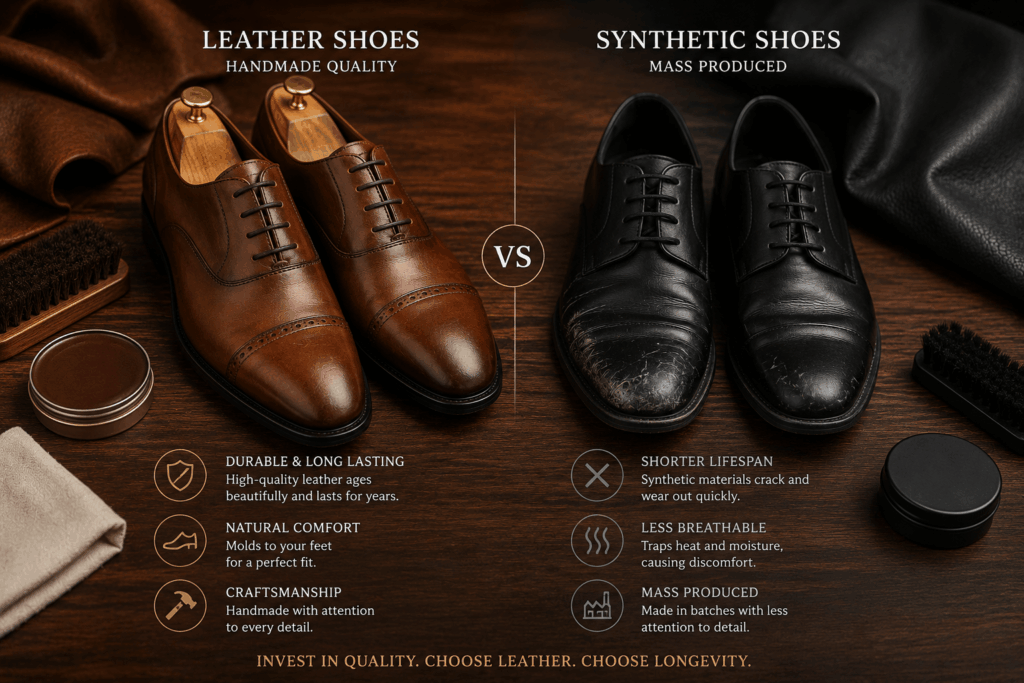
Leather Shoes vs Synthetic: Why Handmade Leather Lasts Longer
By Lerato, Founder of Ribbons Collection
Shoppers often ask whether genuine leather is really worth the extra cost over synthetic alternatives. As someone who’s spent years handmaking leather shoes, here’s an honest, practical comparison — not just why we favour leather, but what actually differs between the two materials.
Durability
Genuine leather is a natural material made of tightly woven fibres, which makes it naturally resistant to tearing and abrasion. With basic care, a genuine leather shoe can last many years and often improves in look and feel with age. Synthetic materials, by contrast, are man-made and tend to crack, peel, or lose their shape well before the shoe’s sole wears out, since they don’t share leather’s fibre structure.
Comfort and Fit Over Time
Genuine leather gradually moulds to the shape of your foot with wear, which is why handmade leather shoes tend to feel better the longer you own them. Synthetic materials are largely rigid from day one and stay that way — they don’t stretch or soften in the same way, which can mean less natural comfort over time.
Breathability
Leather is a porous, natural material that allows air to pass through, which helps regulate temperature and reduce moisture build-up inside the shoe. Most synthetic materials are far less breathable, which can lead to more heat and moisture retention during the day.
Appearance Over Time
Genuine leather develops what’s often called a “patina” — a natural, gradual change in colour and texture that many people find gives the shoe more character with age. Synthetic materials generally don’t age this way; they tend to look the same (or gradually worse, as they crack or peel) rather than developing any richness over time.
Environmental and Craft Considerations
Genuine leather is a natural, biodegradable material, and handmade leather shoes are typically produced in smaller batches with more attention to individual construction. Synthetic materials are usually petroleum-based and don’t biodegrade in the same way, though manufacturing methods and sourcing vary across brands on both sides.
Cost Over Time
Synthetic shoes are often cheaper upfront, but because they wear out and lose shape faster, they typically need replacing more often. Genuine leather shoes cost more initially but, cared for properly (see our leather care guide), often work out better value over the years since they last significantly longer.
Frequently Asked Questions
Is genuine leather really more durable than synthetic leather? Yes — genuine leather’s natural fibre structure makes it more resistant to tearing and abrasion, so it typically lasts significantly longer than synthetic alternatives, especially with basic care.
Do leather shoes need more maintenance than synthetic shoes? Leather shoes benefit from occasional cleaning and conditioning to stay supple and avoid cracking, while synthetic shoes generally need less upkeep — but they also don’t last as long or age as well.
Is genuine leather worth the higher price? For most people who wear their shoes regularly and want them to last for years, yes — the higher upfront cost is often offset by a much longer lifespan compared to synthetic shoes.
Does synthetic leather ever outperform genuine leather? Synthetic materials can be more water-resistant out of the box and are often lighter, which suits some specific uses. But for durability, breathability, and how the material ages, genuine leather generally outperforms synthetic over time.